
Last Updated: October 25, 2026
Quick Summary
Comfortable cat carriers for long travel combine proper ventilation, secure construction, and enough space for your cat to stand, turn around, and lie down without feeling cramped. The best carriers balance safety with comfort, giving your feline companion peace of mind during extended trips.
- Most cats can comfortably stay in a carrier for 4-6 hours without significant stress, requiring breaks for trips exceeding 8 hours.
- Hard-sided carriers offer superior protection for car travel, while soft-sided carriers provide better portability for air travel and hotel stays.
- Introduce your cat to the carrier weeks before travel by leaving it open with treats inside and gradually increasing time spent inside.
- Essential features include ventilation on multiple sides, removable washable padding, heavy-duty latches, and proper sizing allowing 6-8 inches beyond your cat’s length.
- Schedule a veterinary check-up 1-2 weeks before travel and pack a kit with food, water bowls, medications, portable litter box, and recent photos.
Table of Contents
- What Makes a Comfortable Cat Carrier for Long Travel
- Soft-Sided vs Hard-Sided: Which Is Best for Your Trip
- How Long Can a Cat Stay in a Carrier During Travel
- How to Get a Cat Comfortable in a Carrier Before Your Trip
- Essential Features to Look for in the Best Cat Carrier for Travel
- Preparing Your Cat and Carrier for a Long Journey
- Finding Your Perfect Travel Carrier at Bestie Pets Plus
- Frequently Asked Questions
What Makes a Comfortable Cat Carrier for Long Travel
Comfortable cat carriers for long travel combine proper ventilation, secure construction, and enough space for your cat to move slightly without feeling cramped. The best carriers balance safety with comfort, giving your feline companion peace of mind during extended trips.
When you’re planning a long journey with your cat, the carrier becomes a second home. Your cat will spend hours inside it, so comfort matters as much as security. A poorly chosen carrier can cause stress, anxiety, and physical discomfort that makes the entire trip harder on both of you.
Several key factors separate a mediocre carrier from one that truly works. Adequate airflow prevents overheating. Soft interior padding reduces stress on paws and joints. Secure latches ensure your cat can’t accidentally escape during a stop or accident. The right size gives your cat enough room to stand, turn around, and lie down comfortably without being so large that turbulence tosses them around.
At Bestie Pets Plus, we understand that choosing the right carrier is one of the most important decisions for traveling pet owners. The carrier you select will directly impact how calm and comfortable your cat remains throughout your journey.
Soft-Sided vs Hard-Sided: Which Is Best for Your Trip
Hard-sided carriers offer superior protection in accidents and rough handling, making them the safer choice for car travel. They’re rigid, durable, and provide a secure environment that protects your cat from external impact. However, they’re heavier and take up more space in your vehicle.
Soft-sided carriers are lightweight, portable, and easier to maneuver through airports or rest stops. They compress slightly for storage and often feature multiple entry points for easier loading. The trade-off is less structural protection during accidents or if luggage shifts onto the carrier.
For long car trips, a hard-sided carrier generally wins. Your cat gets maximum protection, and the rigid walls prevent the carrier from collapsing if something falls on it. For air travel or frequent stops at hotels, a soft-sided option offers better portability and can fit under airplane seats.
The choice ultimately depends on your travel method. If you’re driving long distances on highways, prioritize hard-sided construction. If you’re combining car travel with flights or frequent hotel stays, a soft-sided carrier’s flexibility becomes more valuable. Many experienced travelers keep both on hand for different trip types.
How Long Can a Cat Stay in a Carrier During Travel
Most cats can comfortably stay in a carrier for 4-6 hours without significant stress, though this varies by individual temperament and carrier comfort. Cats with anxiety or health issues may need breaks sooner. For trips exceeding 8 hours, plan regular stops to let your cat use the litter box, stretch, and drink water.
During these breaks, never leave your cat unattended in the carrier. Open it in a secure, enclosed space like a parked car with windows cracked or a hotel room. Let your cat move around, use a portable litter box, and hydrate. Even 10-15 minutes of movement can significantly reduce stress for the remainder of the journey.
Watch for signs of distress during travel: excessive meowing, drooling, or attempts to escape the carrier. If your cat shows these behaviors, pull over safely and offer a break. Some cats handle long car rides better than others. Younger cats and those accustomed to travel tend to adapt more easily than senior cats or those with limited travel experience.
For trips longer than 12 hours, consider breaking the journey into two days with an overnight stop. This gives your cat time to fully decompress, use the litter box without rushing, and reset mentally for the next leg of travel. Your cat will arrive calmer and less stressed.
How to Get a Cat Comfortable in a Carrier Before Your Trip
Start introducing your cat to the carrier weeks before your trip, not the day before. Leave the carrier open in a common area of your home. Place treats, toys, or a favorite blanket inside to create positive associations.
Gradually increase time spent in the carrier. Sit nearby while your cat investigates. Reward calm behavior with treats and praise. Once your cat enters voluntarily, close the door for a few seconds while you’re present, then open it immediately. Extend this duration slowly over several days.
Practice short trips around your neighborhood. Start with 5-10 minute drives to the park or a quiet street. Return home immediately so your cat learns that the carrier and car ride lead somewhere and back. Gradually increase trip length and duration.
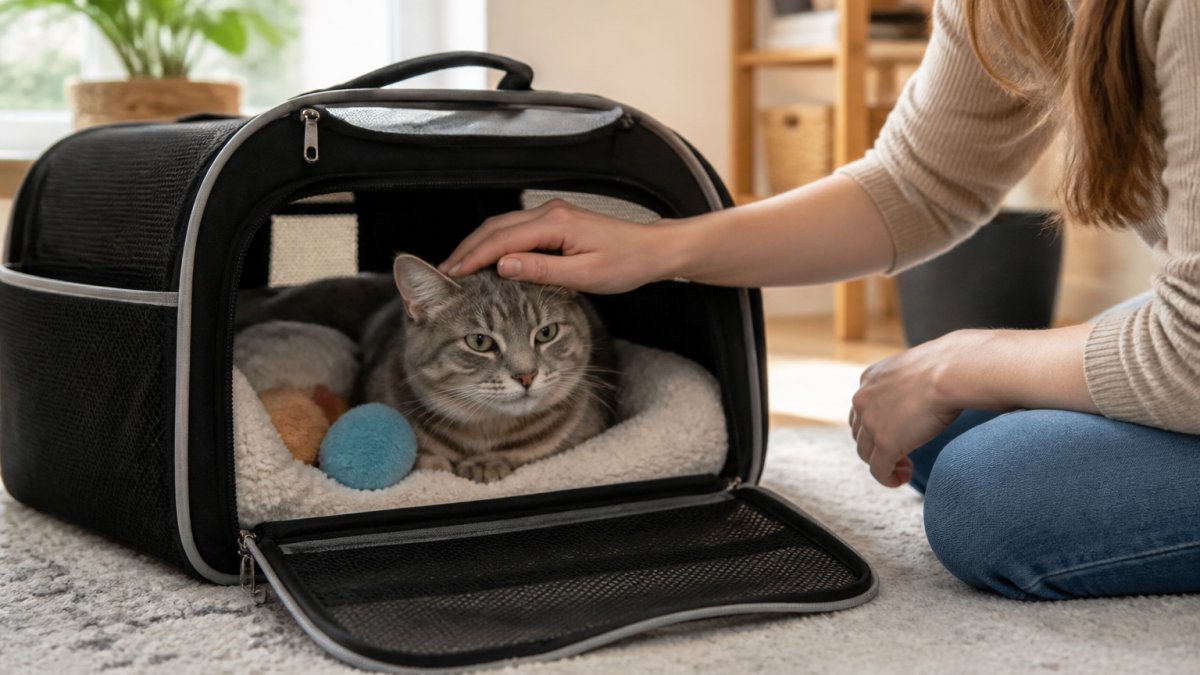
Create a calming environment inside the carrier. Use familiar blankets that smell like home. Include a favorite toy or item with your scent. Some cats respond well to calming pheromone sprays designed for travel. Avoid strong perfumes or air fresheners that can stress sensitive cats.
Never force your cat into the carrier or use it as punishment. This creates negative associations that make future travel increasingly difficult. Patience during the preparation phase pays dividends when your cat enters the carrier willingly on travel day.
Essential Features to Look for in the Best Cat Carrier for Travel
Ventilation is non-negotiable. Your carrier needs adequate airflow on multiple sides to prevent overheating and maintain fresh air circulation. Look for carriers with vents on the front, sides, and top. Mesh panels allow your cat to see outside, which reduces anxiety for many cats.
Interior padding or soft lining protects your cat’s joints during travel and absorbs moisture from accidents. Removable, washable liners make cleanup simple. Padding also reduces noise and vibration transmission that can stress your cat.
A secure latching system prevents accidental escapes. Test all latches and zippers before purchasing. Cheap latches fail under stress or repeated use. Quality carriers use heavy-duty hardware that stays secure through years of travel.
Size matters more than most people realize when selecting comfortable cat carriers. Your carrier should allow your cat to stand, turn around, and lie down comfortably. Measure your cat’s length from nose to tail base, then add 6-8 inches.
Handles or straps that distribute weight evenly reduce hand and wrist strain during transport. Padded handles are more comfortable for longer carries. Some carriers include shoulder straps for hands-free carrying, which is valuable when managing luggage or children.
Water and food bowls that attach to the carrier door let your cat hydrate and eat during long stops without removing them from the carrier. This is especially useful during rest breaks on long drives.
Key features separate a comfortable travel carrier from a mediocre one.
| Feature | Purpose | What to Look For |
|---|---|---|
| Ventilation | Prevents overheating and maintains fresh air | Vents on front, sides, and top with mesh panels |
| Interior padding | Protects joints and absorbs moisture | Removable, washable liners |
| Secure latches | Prevents accidental escapes | Heavy-duty hardware tested before purchase |
| Proper size | Allows comfort without excess movement | Cat length plus 6-8 inches |
| Padded handles | Reduces strain during transport | Shoulder straps for hands-free carrying |
| Attached bowls | Enables hydration during long stops | Water and food bowls on carrier door |
Preparing Your Cat and Carrier for a Long Journey
Ensure your cat has proper identification before any trip. A microchip is essential, plus a collar with an ID tag containing your phone number and destination address. If your cat escapes during travel, identification dramatically increases the chances of recovery.
Schedule a veterinary check-up 1-2 weeks before your trip. Discuss any health concerns related to travel. Ask about calming medications if your cat has severe anxiety. Your vet can also ensure vaccinations are current, especially if you’re crossing state lines or flying.
Pack a travel kit with essentials: food and water bowls, enough food for the entire trip plus extra, medications, vaccination records, a portable litter box with litter, waste bags, and a first aid kit. Include recent photos of your cat in case of emergency. Keep these items easily accessible, not buried in luggage.
Consider a reflective AirTag cat collar to track your cat’s location if they escape during travel. Modern tracking technology provides peace of mind during long journeys, especially when stopping at unfamiliar locations.
A waterproof pet seat cover protects your car’s interior during long trips, reducing stress about accidents or spills. This lets you focus on your cat’s comfort rather than worrying about damage to your vehicle.
Test your car’s climate control before the trip. Cats are sensitive to temperature extremes. Keep the car cool during warm months and warm during cold months. Never leave your cat unattended in a parked car, even with windows cracked.
Finding Your Perfect Travel Carrier at Bestie Pets Plus
Choosing the right carrier sets the foundation for stress-free travel with your cat. At Bestie Pets Plus, we curate a selection of carriers designed specifically for long-distance travel. Our carriers combine comfort features with durability, so your cat arrives at your destination calm and safe.
We understand that every cat has different needs. Some prefer soft-sided carriers for their flexibility, while others do better with hard-sided construction. Our collection includes options for various travel styles and cat temperaments, ensuring you find a carrier that matches your specific situation.
Browse our travel carriers and discover options that prioritize your cat’s comfort and your peace of mind. Whether you’re driving across the country or flying to visit family, the right carrier makes all the difference in your cat’s travel experience.
Frequently Asked Questions
What features should I prioritize in a comfortable cat carrier for long travel?
Look for carriers with good ventilation on multiple sides, padded interiors, and enough space for your cat to turn around and lie down. Carriers with top-loading doors make getting cats in and out easier. Dark interiors help cats feel secure during travel. Sturdy construction and secure latches prevent accidental escapes. Consider carriers with removable, washable liners for easy cleanup.
How long can a cat stay in a carrier during travel without a break?
Most cats can stay comfortably in a carrier for 2-4 hours before needing a break. For longer trips, plan to stop every 4-6 hours to let your cat use the litter box, drink water, and stretch. Never leave a cat in a carrier for more than 8 hours without a substantial break. Watch for signs of stress like excessive meowing or panting, which mean your cat needs immediate attention.
How do I help my cat get comfortable in a carrier before a long trip?
Start weeks before travel by leaving the carrier open at home so your cat can explore it freely. Place treats and toys inside to create positive associations. Practice short car rides to help your cat adjust to motion and sounds. Feed your cat near the carrier to reinforce that it’s a safe space. Never force your cat inside; let them enter voluntarily. Reward calm behavior with praise and treats.
Are soft-sided carriers better than hard-sided carriers for long travel?
Both have advantages. Soft-sided carriers are lighter, more flexible in tight spaces, and often feel less intimidating to cats. Hard-sided carriers offer better protection in accidents and are easier to clean. For long car travel, soft-sided carriers are often preferred because they’re more comfortable and portable. Choose based on your travel method and your cat’s temperament; anxious cats may feel safer in hard-sided carriers with darker interiors.
Traveling with your cat doesn’t have to be stressful. The carrier you choose shapes how your cat experiences the journey. Bestie Pets Plus offers carefully selected carriers that combine ventilation, padding, security, and portability. Start your cat’s travel preparation today and arrive at your destination knowing your feline companion traveled safely and comfortably.






0 Comments