
Last Updated: November 10, 2026
Quick Summary
Travel crates are worth it when they are sized correctly and built to hold up in a collision, not just when they look sturdy. Measure your pet nose-to-tail and at its height and width, then add a little clearance. Choose hard-sided walls, secure latches and fine ventilation over wire or collapsible designs.
- Measure nose-to-tail, height while standing, and widest width before shopping.
- Sizing charts vary by manufacturer, so check interior dimensions on the product page.
- Wire or collapsible crates can collapse or break open during an incident, per the ASPCA.
- Hard-sided carriers generally resist impact better than thin fabric or mesh.
- Rabbits and guinea pigs need solid floors and walls, not wide wire gaps.
Table of Contents
- Why Safe Travel Crates Matter for Small Pets
- How to Size a Pet Travel Crate Correctly
- Ventilation, Construction and Escape Prevention
- Top Travel Crates for Small Pets Compared
- Airline-Approved Pet Carriers for In-Cabin Travel
- Safe Car Travel with Small Pets
- Preparing Your Pet’s Crate for Travel
- Choose Your Next Travel Crate with Bestie Pets Plus
- Frequently Asked Questions
Why Safe Travel Crates Matter for Small Pets
Travel crates are worth it when they are built and sized to protect a small animal during a trip, and the research supports taking that seriously. Soft-sided carriers account for 29.0% of the pet-carrier product category in 2026, according to a Future Market Insights pet carrier market analysis, which shows how common the soft-sided format has become for travel.
Popularity is not the same as safety. The Center for Pet Safety runs independent, science-based crash testing on carriers, crates and kennels, and it notes that a product can look sturdy and still perform poorly in a collision (Center for Pet Safety crash testing research). That gap is why we treat a travel crate as safety equipment, not just a container.
The ASPCA warns that wire or collapsible crates can collapse or break open during an incident, which can cause serious injury or death (ASPCA guidance on traveling with pets). For small pets, the question is less about comfort and more about whether the walls, door and latches will hold.
How to Size a Pet Travel Crate Correctly
Sizing is where most small-pet crate purchases go wrong, and the fix is a tape measure and a five-minute session with your pet, not a size label. The goal is a crate that lets your pet stand, sit, lie down and turn around without touching the top or sides, while leaving just enough room for a folded towel or thin pad.
Measure length first. With your pet standing naturally on a flat surface, measure from the tip of the nose to the base of the tail. Do not stretch the animal out or measure to the tail tip. Write the number down.
Measure height while standing. Measure from the floor to the top of the head, or to the highest point of the ears if they stand erect. For pets that sit upright, also measure floor to head in a seated position and use the larger of the two numbers.
Measure width at the widest point. For most small pets this is across the shoulders or the hips, whichever is broader. Rabbits and guinea pigs are widest at the hips; birds are widest across folded wings.
Add clearance, not guesswork. A little headroom and a little extra length beyond nose-to-tail usually help a pet turn without bracing against the walls. A crate that is too large lets a pet slide and bounce during braking, which adds the movement you are trying to prevent. A crate that is too small restricts breathing and forces the animal to stay compressed for the whole trip.
Worked example. A guinea pig measuring 10 inches nose-to-tail and 7 inches tall at the head needs an interior of roughly 12 inches long and 9 to 11 inches tall, with enough width to turn around. A small rabbit at 16 inches long and 12 inches tall needs an interior closer to 18 inches long and 14 to 16 inches tall. Compare those interior numbers to the product’s listed exterior dimensions, because manufacturers usually publish outside measurements that include the frame, door and handle.
Check the door opening, not just the box. A crate can be the right size and still be hard to load if the door opening is narrow. Measure the door’s clear width and height and compare it to your pet’s widest point plus a little slack for your hands.
Watch out: sizing charts vary by manufacturer, so verify the interior length, width and height on the product page before ordering.
For pets that will fly in cabin, the sizing target changes: the carrier must fit under the seat in front of you, so measure the airline’s underseat dimensions and treat those as the ceiling on exterior size. Our small dog carrier range is one place to compare options for smaller companions.
Ventilation, Construction and Escape Prevention
Look for well-ventilated walls on at least two sides, a door that latches securely, and fasteners that a small pet cannot work open. Mesh panels should be fine enough that a paw or nose cannot get caught in them.
Construction matters as much as airflow. Hard-sided carriers generally resist impact better than thin fabric, while soft-sided models are lighter and easier to store. Fabric and mesh crates suit short trips and small breeds, according to Cornell University Riney Canine Health Center crate guidance, which describes them as lightweight and foldable rather than protective in a crash.
Top Travel Crates for Small Pets Compared
Most crate roundups are written for dogs and cats, which leaves rabbit, guinea pig, bird and other small-pet owners sorting through advice that does not fit their animal. The comparison below is organized by species and use case, and it separates what the research supplied from what you should verify on the product page.
| Crate | Starting Price | Best For |
|---|---|---|
| Frisco Fold & Carry Double Door | $23.79 | Budget folding crate with carry handle; extra-small size suits short car trips |
| Top Paw Travel Pet Carrier, Metal Door | $34.99 | Pets in the 20-90 lb range; not a small-pet pick despite the metal door |
| Gunner G1 Kennel | $1,000+ | Crash-safety testing and tie-down pins; smallest version may exceed small-pet needs |
| Diggs Revol | Around $500 | Premium upgrade over wire crates |
Rabbits and guinea pigs. These animals need a hard-sided base, a solid floor and walls with ventilation slots rather than wide wire gaps, because a leg or nose can catch in open mesh. A hard-sided carrier with a top-loading door is easier for a prey animal that panics when reached for from the front. Line the floor with absorbent bedding and skip wire grates entirely.
Birds. Birds need a carrier with horizontal bars or fine mesh on at least two sides, a secure latch that a beak cannot work open, and a perch or non-slip floor so the bird is not sliding during stops. Fabric carriers are a poor fit for most birds because a beak can tear through mesh in minutes.
Small rodents and other pocket pets. Hamsters, rats and mice do best in a small hard-sided carrier with fine ventilation and a locking lid. The crate should be sized tightly enough that the animal cannot build up speed before hitting a wall in a stop.
Small dogs and cats. A hard-sided carrier with a steel door and good ventilation is the default safe pick. Soft-sided carriers are lighter and easier to store, and fabric and mesh crates suit short trips, according to Cornell University Riney Canine Health Center crate guidance, which describes them as lightweight and foldable rather than protective in a crash.
What to verify before buying. Check the interior dimensions against your measurements, confirm the door opening is wide enough to load the pet, look for a latch that cannot be worked open from inside, and confirm whether the manufacturer publishes any crash-testing information.
Watch out: a crate marketed as “airline approved” is not automatically accepted by every carrier, so confirm the airline’s current requirements before you rely on that claim.
Browse our small dog carrier range for options sized for smaller companions, and our airline pet carrier options for in-cabin use.
Airline-Approved Pet Carriers for In-Cabin Travel
For flights, the carrier must fit under the seat in front of you, and airline rules set the exact dimensions. Check your airline’s current policy before you buy, since limits and fees change.
A soft-sided carrier can be easier to fit in tight spaces. Keep the carrier closed, ventilated and labeled with your contact details. If you travel long distances often, a guide on How to Choose Comfortable Cat Carriers for Long Travel covers comfort features for extended trips.
You can also explore our airline pet carrier options designed for in-cabin use.
Safe Car Travel with Small Pets
In a vehicle, a carrier should be secured so it cannot slide or tip during braking. Place it on the floor of the back seat or buckle it in with a seat belt through the carrier’s handle. Never let a pet ride loose in the front seat.
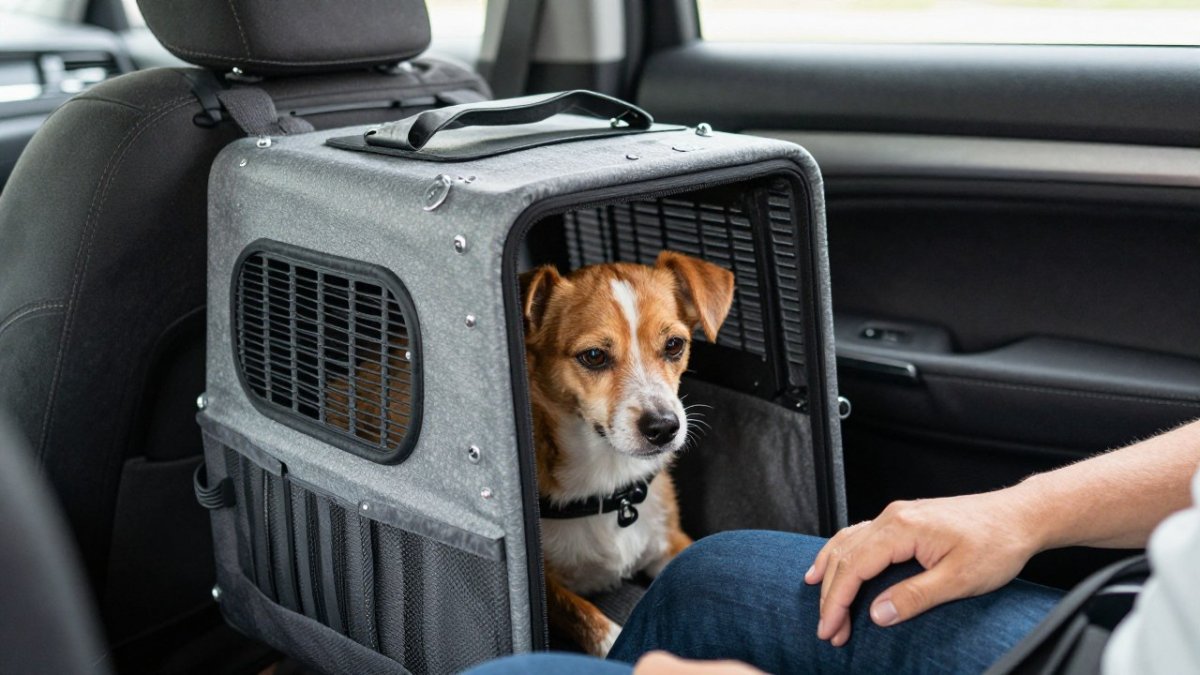
Keep the cabin cool and ventilated, and plan breaks for water. A small pet should never be left alone in a parked car, where temperatures climb quickly.
Our recommended option for car trips is a carrier backpack that keeps small pets close and secure: see the Pet Dog Carrier Backpack for details.
Preparing Your Pet’s Crate for Travel
Line the floor with absorbent bedding such as shredded paper or a towel, and attach a water dish that clips to the wall. Introduce the crate weeks before the trip so your pet associates it with comfort rather than stress.
Test the setup on short drives first. Reducing unnecessary movement and keeping the routine calm helps most small pets settle. For durable gear that holds up to repeated trips, read Durable Travel Accessories for Dogs: 7 Picks Tested for Wear.
Choose Your Next Travel Crate with Bestie Pets Plus
Choosing a safe travel crate comes down to the right size, solid construction, and proper ventilation. At Bestie Pets Plus, we carry practical, comfortable pet products for dogs, cats, birds and small animals, selected to fit naturally into your pet’s routine. Browse our range and pick the crate that matches your pet and your trips. Pricing depends on the product, so check the product page for current prices.
Frequently Asked Questions
What are the safest travel crates for small pets?
The safest travel crates are sturdy, well-ventilated and escape-resistant, with a secure door and no sharp edges or gaps. Hard-sided carriers generally protect small pets better than flimsy mesh bags, and crates with tie-down points or locking doors add security in a vehicle. Look for a crate that lets your pet stand, sit, lie down and turn around, and check that the materials are non-toxic. Independent crash-testing results, where a manufacturer publishes them, are a useful extra signal when comparing products.
How do I choose the right size travel crate for a small pet?
Measure your pet from nose to base of tail, then height from floor to top of head while sitting upright. Add a few inches to each measurement so your pet can stand, sit, lie down and turn around without touching the top or sides. A crate that is too large can let a pet slide and get hurt during sudden stops, so avoid oversizing. Check the manufacturer’s sizing chart, since dimensions vary between brands and models.
Are airline-approved pet carriers different from car travel crates?
Airline-approved carriers must meet specific size limits for the cabin or cargo hold and usually need to fit under the seat, which is why many are soft-sided. Car travel crates prioritize secure fastening, impact resistance and ventilation during a drive. A carrier that meets airline rules is not automatically safe in a car, so check the crate’s securing options and confirm the airline’s current dimensions before you book.



0 Comments