
Quick Summary
The safest choice of safe bird toys for large parrots is sturdy, thick, untreated materials that match your bird’s beak strength, with no loose parts, open links or frayed rope. Dense hardwood, stainless steel and tightly twisted natural rope are the standards, and every toy should be checked often for wear.
- Choose dense, untreated hardwood such as hard maple, manzanita or birch over soft pine or balsa.
- Use stainless steel hardware with welded-closed links, avoiding zinc-plated or galvanized pieces.
- Replace rope with frayed strands, since loose ends can wrap a toe or leg or cause impaction.
- Match toy size and strength to your specific bird, since a cockatoo and an African grey chew differently.
- Inspect toys daily for loose parts and weekly for cracks, splinters and worn connectors.
Table of Contents
- Why Large Parrots Need Tougher, Safer Toys
- Matching Toy Size and Beak Strength to Your Bird
- A Material-by-Material Safety Checklist
- Natural Bird Toys for Parrots: What Holds Up and What Doesn’t
- Extra Large Bird Toys for Macaws and Cockatoos
- Setup, Entanglement Prevention, and Introducing New Toys
- Inspecting, Rotating, and Replacing Worn Toys
- Shop Safe Enrichment for Your Large Parrot at Bestie Pets Plus
- Frequently Asked Questions
Why Large Parrots Need Tougher, Safer Toys
Last Updated: November 5, 2026
Large parrots such as macaws, cockatoos and African greys have beaks strong enough to crack nuts, bend metal and splinter soft wood. A toy that suits a budgie can be dangerous for a macaw in minutes. That is why choosing safe bird toys for large parrots takes more care than picking something bright and colorful off the shelf.
Enrichment is an important part of good bird care. Parrots are intelligent, social animals. Without chewing, foraging and problem-solving, many become bored, and boredom can lead to feather plucking and other stress behaviors.
Here’s the tricky part: a toy labeled “parrot-safe” is not automatically safe for your bird. Safety depends on how a particular bird plays with a toy, so the label is a starting point, not the final answer.
Large birds need toys that hold up to sustained chewing. They also need toys that avoid the hazards of small parts, sharp edges and open links that can trap a toe or head. Think of enrichment as a safety job first and a fun job second.
- Strong beaks can destroy weak materials quickly
- Loose parts can be swallowed or cause injury
- Open hooks and links can catch a toe, wing or neck
- Boredom often drives destructive, unsafe chewing
Watch out: a toy that looks fine for a week can become unsafe once the bird has chewed through the outer layer. Check it often.
Matching Toy Size and Beak Strength to Your Bird
Start with your bird’s size and beak strength. A cockatoo and an African grey may both be “large,” but their chewing power differs. Match the toy to the bird you actually own, not the one the box describes.
Look for toys sized so the bird can grip and manipulate them without swallowing or trapping any part. Heavier-duty construction suits strong-beaked species better than light, thin materials.
Pay attention to how your individual bird behaves. Some parrots destroy everything in minutes, while others mostly preserve toys and prefer to forage. Observation tells you more than a generic size chart.
A Material-by-Material Safety Checklist
Most toy listings say “bird-safe” and stop there. The useful question is not whether a material is on a safe list but how that specific piece of wood, rope, metal, or plastic can fail in your bird’s beak.
Wood. Dense, untreated natural wood, such as hard maple, manzanita, or birch, is the standard for large-beaked birds because it resists splintering into long shards. Soft pine and balsa are fine for shredding but disappear fast under a macaw. Avoid wood with paint, stain, varnish, or glitter; these can chip and be ingested.
Dyes and finishes. Vegetable-based or food-grade dyes are the common recommendation, but color alone tells you little. Look for toys that state the dye type, and avoid anything with a glossy coating, metallic paint, or an unlabeled finish. When in doubt, choose undyed wood.
Rope and leather. Rope is one of the most misunderstood materials. Tightly twisted, thick natural-fiber rope (sisal, cotton, or hemp) is acceptable when knots are secure and ends are finished.
Metal hardware. Stainless steel is the safest choice for quick links, skewers, chains, and bells. Avoid zinc-plated, galvanized, or cheap plated hardware, which can flake and expose birds to zinc or other metals.
Plastic and acrylic. Thick, smooth acrylic with no cracks or sharp molded edges is generally durable. Thin plastic, brittle pieces, and small molded parts that can snap off are the risk. Inspect seams and drilled holes for stress cracks, and discard any piece that has chipped.
Fasteners and small parts. Beads, bells, nuts, and bolts should be sized so they cannot be swallowed and should be secured so they cannot be unscrewed by a determined beak. Avoid toys held together only by small split rings or crimped connectors that can fail under load.
Shreddable naturals. Coconut shell, cardboard, corn cob, palm leaf, and paper are excellent enrichment but wear quickly. Confirm they are untreated and free of staples, tape, or glue, and plan to replace them often.
Watch out: a toy can pass every visual check and still be wrong for your bird, a strong chewer may defeat hardware or rope that is safe for a milder bird, so reassess materials against how your parrot actually plays.
The article breaks down which materials suit large parrots and which hazards to watch for in each.
| Material | Safer choice | Main hazard |
|---|---|---|
| Wood | Dense, untreated hard maple, manzanita or birch | Soft pine and balsa disappear fast; paint or glitter can be ingested |
| Rope | Tightly twisted, thick sisal, cotton or hemp with finished ends | Frayed strands can wrap a toe or leg and cause impaction |
| Leather | Thick, vegetable-tanned leather without loose rivets or snaps | Metal rivets or snaps can be pried loose |
| Metal hardware | Stainless steel with welded-closed links | Zinc or galvanized plating can flake; open links can trap a toe |
| Plastic and acrylic | Thick, smooth acrylic without cracks | Thin, brittle plastic and small snap-off parts |
| Shreddable naturals | Untreated coconut shell, cardboard, corn cob or palm leaf | Staples, tape or glue; wear quickly |
Natural Bird Toys for Parrots: What Holds Up and What Doesn’t
Natural materials like wood, coconut and paper appeal to many owners, and they offer great chewing and foraging value. Compare current bird enrichment toy options to see which natural picks hold up to large beaks. But not all natural toys hold up to large beaks. Soft wood and thin bamboo can splinter quickly, and strings or rope can unravel into hazards.
Extra Large Bird Toys for Macaws and Cockatoos
Macaws and cockatoos need sturdy toys. Choosing toys sized and built for large beaks helps keep them safe.
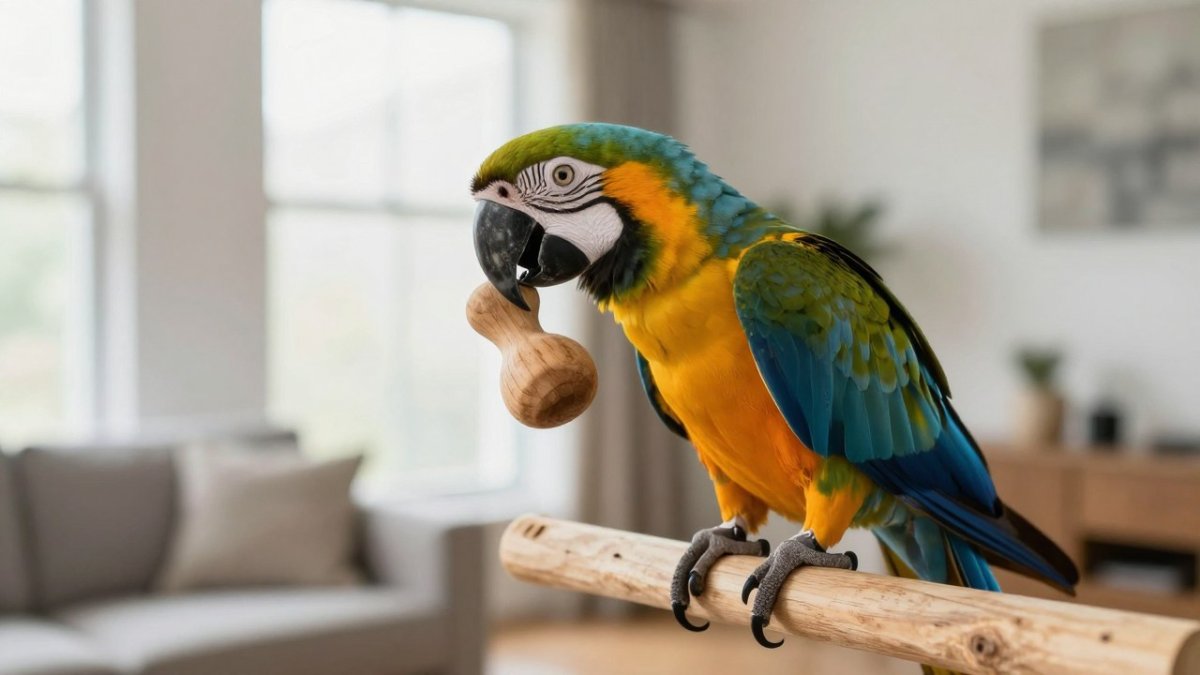
Choose toys with a single stable connection point rather than many small links that can fail. A large foraging toy with several compartments also gives a macaw something to work at for a while.
Here’s a practical example: a cockatoo may strip a soft toy in an afternoon. Switching to a thicker hardwood chew with secure hardware usually lasts far longer.
Setup, Entanglement Prevention, and Introducing New Toys
Place toys so the bird can reach them safely and without getting tangled. Browse rotating parrot treat toys to find one that fits a large parrot’s setup. Hang swings and chew toys from sturdy points, and keep rope lengths short. Remove any toy that could wrap around a leg, wing or neck.
Introduce new toys slowly. Some birds are wary of anything unfamiliar. Place the toy near the cage or perch first, then move it closer over several days. If your bird shows fear, back off and try again later rather than forcing contact.
Keep a few toys in rotation. Swapping toys every week or two keeps the bird interested and makes it easier to spot wear.
Inspecting, Rotating, and Replacing Worn Toys
Inspection is where most toy injuries are actually prevented, and it needs a routine rather than a glance. Build a short daily check into cage cleaning and a deeper weekly inspection into your schedule.
Daily check (about one minute per toy). Look for loose or missing hardware, rope that has begun to fray, splintered wood, cracked acrylic, and any small part that has broken free. Confirm quick links are still closed and that no toy has shifted into a position where it could trap a toe or head. Remove anything with a hazard you cannot fix on the spot.
Weekly deep inspection. Unhook each toy and examine it from every side. Run a finger along wood edges for splinters, flex acrylic to check for hairline cracks, and pull gently on knots and connectors to confirm they hold. Check rope for thin or broken strands and for any loop that could enlarge enough to catch a leg. Look at metal for flaking plating, rust, or sharp burrs.
Signs a toy must be retired, not repaired:
- Rope that is frayed into loose strands or has lost its tight twist
- Wood chewed down to thin slivers or split into sharp shards
- Acrylic with cracks, chips, or sharp edges
- Hardware that is bent open, missing, or showing flaking plating
- Any loose bead, bell clapper, nut, or bolt that could be swallowed
- A toy that has shifted or loosened enough to create an entanglement risk
Replacement schedule. There is no universal calendar because wear depends on the bird. A heavy chewer may destroy a softwood toy in a day and a hardwood toy in weeks, while a gentler bird may keep the same toy for months. Track how long each toy lasts for your bird and replace before it reaches the failure point you have observed. Shreddables like cardboard, paper, and palm leaf should be refreshed frequently; durable hardwood and acrylic last longer but still need the weekly check.
Rotation. Keep three to five toys in active use and store the rest out of the cage. Browse rotating bird toys to replace worn ones as you rotate. Swap one or two every week or two so the bird stays interested and so you can inspect stored toys before they go back in. Rotation also makes wear easier to spot, because you handle each toy on a regular cycle.
Watch out: a toy that looks intact can hide a loosened connector or a chewed-through inner layer, so inspect by feel and flex, not just by sight, and err toward replacing anything you are unsure about.
Shop Safe Enrichment for Your Large Parrot at Bestie Pets Plus
Choosing safe bird toys for large parrots comes down to matching size, materials and hardware to your bird, then checking those toys often. Start with the checklist above, watch how your bird plays, and replace anything that shows wear.
If you’re looking for sturdy options, colorful parrot toy balls are a good place to start for macaws and cockatoos. Prices depend on the item, quantity and delivery, so check the product page for current pricing. Visit Bestie Pets Plus to explore our bird enrichment range and find toys that fit your large parrot’s lifestyle.
Frequently Asked Questions
What are some good bird toys for large parrots?
Good choices for large parrots are sturdy, solidly built toys that suit the bird’s beak and body, with no small loose parts. Foraging toys that hide treats and shredding toys made from thick, bird-safe materials keep large beaks busy. Choose items sized for the bird’s beak and body, and check them often for cracks, frayed chains, or chewed-through connectors. Because safety depends on how a particular bird plays, watch your parrot’s first few sessions with any new toy and remove it if it starts to splinter or come apart.
How do I choose a toy that can withstand a large parrot’s beak?
Look for sturdy toys that are heavy-duty and well secured. Check that chains, clips, bells and skewers are fastened with closed hardware. Toys sized to your bird’s beak and body hold up better, since a toy that is too small or too light is easier to break apart. Even durable toys can fail, so keep inspecting them regularly.
Which materials should I avoid in large parrot toys?
Avoid toys made from soft or thin materials and toys with loose or cheap hardware that can be chewed or ingested. Be cautious with small beads, loose strings, and fabric that can unravel and cause entanglement. Toys with sharp edges, open links, or small parts that can be pulled off are unsafe for large beaks. Check each toy’s construction before buying, and remove any item that begins to fray or splinter.
How often should I inspect or replace parrot toys?
Inspect toys daily during play and rotation, looking for cracks, splinters, loose hardware, frayed rope, and chewed-through connectors. Replace any toy that is damaged, has sharp or exposed edges, or has parts that can come loose. Heavily chewed toys usually need replacing sooner than lightly used ones. Rotating toys every week or two also helps you spot wear early.





0 Comments