
Last Updated: November 12, 2026
Quick Summary
The safest non-toxic aquarium cleaning tools are mechanical ones made of inert materials such as polypropylene, aquarium-grade silicone, and plain white melamine foam, used without soap or chemicals. Magnetic scrapers clean the glass from outside the tank, while gravel vacuums and turkey basters handle substrate and debris. Always verify that a tool lists its materials and says it is safe for fresh and salt water.
- Mechanical tools like magnetic scrapers and gravel vacuums clean without any chemicals at all.
- Choose tools made of inert plastics, aquarium-grade silicone, or plain white melamine foam.
- Avoid bare or coated metal, since copper and other ions are toxic to shrimp and snails.
- Keep dish soap, glass sprays, and bleach out of the tank, as even trace residue can harm fish.
- Rinse new tools in plain water, let them dry, and dedicate them to a single tank.
Table of Contents
- Why Non-Toxic Aquarium Cleaning Tools Matter
- Quick Comparison: Best Non-Toxic Aquarium Cleaning Tools
- Aquarium Algae Scraper Options: Magnetic and Handheld
- Fish Tank Cleaning Tools Vacuum and Water Change Equipment
- How to Clean Fish Tank Glass Safely, Step by Step
- Choosing a Non-Toxic Fish Tank Cleaner and Avoiding Household Chemicals
- Common Cleaning Mistakes and How to Avoid Them
- Choosing Your Starter Cleaning Kit from Bestie Pets Plus
- Frequently Asked Questions
Keeping a fish tank clean is a routine that matters for the animals living in it, and the tools you use matter too. Many aquarium owners reach for household sprays, soaps, or abrasive pads without thinking about what residue they leave behind.
Clean water and safe equipment go hand in hand. New aquarium products are introduced regularly, which makes it harder to sort the safe from the unsafe.
Why Non-Toxic Aquarium Cleaning Tools Matter
Non-toxic aquarium cleaning is less about a product label and more about what the tool is made of, what it was coated or treated with, and what residue it can leave in the water. Fish, shrimp, snails, and corals are sensitive to very small amounts of surfactants, solvents, and dissolved metals, and a tool that looks clean can still introduce those contaminants.
What “non-toxic” actually means for aquarium tools
A tool is aquarium-safe when every surface that touches tank water is made of a material that does not leach, corrode, or break down in fresh or salt water. In practice, that means:
- Inert plastics: polyethylene, polypropylene, and rigid PVC are common, low-risk choices for scrapers, handles, and siphon fittings. They do not react with water and do not need coatings.
- Silicone: aquarium-grade silicone is flexible, heat-resistant, and safe for seams, spatulas, and grips. Avoid silicone that lists antifungal or antibacterial additives.
- Glass and ceramic: safe when unfrosted and uncoated; frosted or painted glass can shed particles.
- Melamine foam: the original white melamine sponge is widely used for spot algae because it works mechanically, without detergent. Colored or “extra-power” versions may include additives, so stick to plain white foam and rinse it thoroughly.
- Stainless steel: only grades marketed as aquarium-safe, and only where the manufacturer confirms it is not treated with a coating. Bare, untreated metal can corrode in salt water and release ions.
How to verify a claim before you buy
Labels are marketing until you check the details. Experienced keepers often verify three things: the material list, the absence of added cleaning agents, and the intended water type. Look for an explicit statement that the tool is safe for fresh and salt water, a material callout (for example, “polypropylene body, silicone edge”), and a note that no soap, oil, or fragrance is applied. If a listing only says “safe” or “eco-friendly” without naming materials, treat it as unverified.
The contamination risks that matter most
- Surfactants and detergents: soap residue disrupts the mucus layer on fish gills and can be lethal to invertebrates at trace levels. Rinsing does not reliably remove it from porous sponges or brushes.
- Metal ions: copper and other metals are toxic to shrimp, snails, and reef invertebrates at very low concentrations. Untreated metal scrapers, brass fittings, and coated “rustproof” tools are common culprits.
- Coatings and residues: anti-rust oils, mold-release agents, and painted finishes can flake or dissolve. Any tool with a visible coating should be avoided unless the maker confirms it is aquarium-safe.
- Cross-tank transfer: a sponge or brush used in one tank can carry pathogens, algae, or medication residue into another. Dedicated tools per tank reduce that risk.
Watch out: a tool labeled “aquarium safe” can still be packaged with a protective oil; rinse and dry it before first use, and discard it if an oily film persists.
Matching the tool to the water and the inhabitants
Safety is not one-size-fits-all. Planted tanks tolerate most inert plastics, but coarse scrapers can snag leaves and uproot stems. Reef tanks are least forgiving: avoid any bare metal, and choose tools with no exposed screws or hinges that can corrode. Shrimp and snail tanks warrant extra caution with any metal component, because copper sensitivity is well documented in the hobby. For sensitive fish, minimize how often tools enter the water and prefer magnetic scrapers that clean from the outside.
Cleaning and storing tools between uses
Rinse every tool in plain water after use, scrub off algae and debris, and let it air-dry completely before storage. Dry storage limits bacterial growth and prevents mildew on sponges and brushes. Do not disinfect with bleach or household cleaners unless the manufacturer gives aquarium-specific instructions; if you do use a disinfectant, rinse exhaustively and let the tool dry fully before reuse.
Quick Comparison: Best Non-Toxic Aquarium Cleaning Tools
| Tool | Type | Starting Price | Best For |
|---|---|---|---|
| Flipper FLOAT Magnetic Algae Scraper | Magnetic scraper | $35.00 | Stubborn algae on glass or acrylic |
| Python Aquarium Maintenance System | Gravel vacuum and water changer | $45.00 | Large water changes and substrate cleaning |
| OASE Aquarium Glass Cleaner | Glass cleaning tool | $15.00 | Routine glass maintenance |
| OXO Deep Clean Brush Set | Brush set | $8.00 | Filter intakes, heaters, and tight corners |
| Sicce Ultra Zero Utility Pump | Utility pump | $70.00 | Draining tanks during major maintenance |
| Standard Aquarium Turkey Baster | Spot cleaner | $5.00 | Debris in sand and rockwork |
| Standard Aquarium Toothbrush | Manual scrubber | $2.00 | Scrubbing rocks, ornaments, and equipment |
| Mr. Clean Magic Eraser (Original) | Melamine sponge | $3.00 | Spot cleaning algae on glass |
| Fritz Aquatics Aquarium Cleaner | Cleaning solution | $12.99 | Glass and acrylic surfaces |
Starting Price
Aquarium Algae Scraper Options: Magnetic and Handheld
Algae scrapers come in two main forms: magnetic and handheld. Magnetic scrapers work through the glass, so you never need to put your hand in the water. The Flipper FLOAT Magnetic Algae Scraper is a dual-sided design that flips from a scrubber to a scraper.
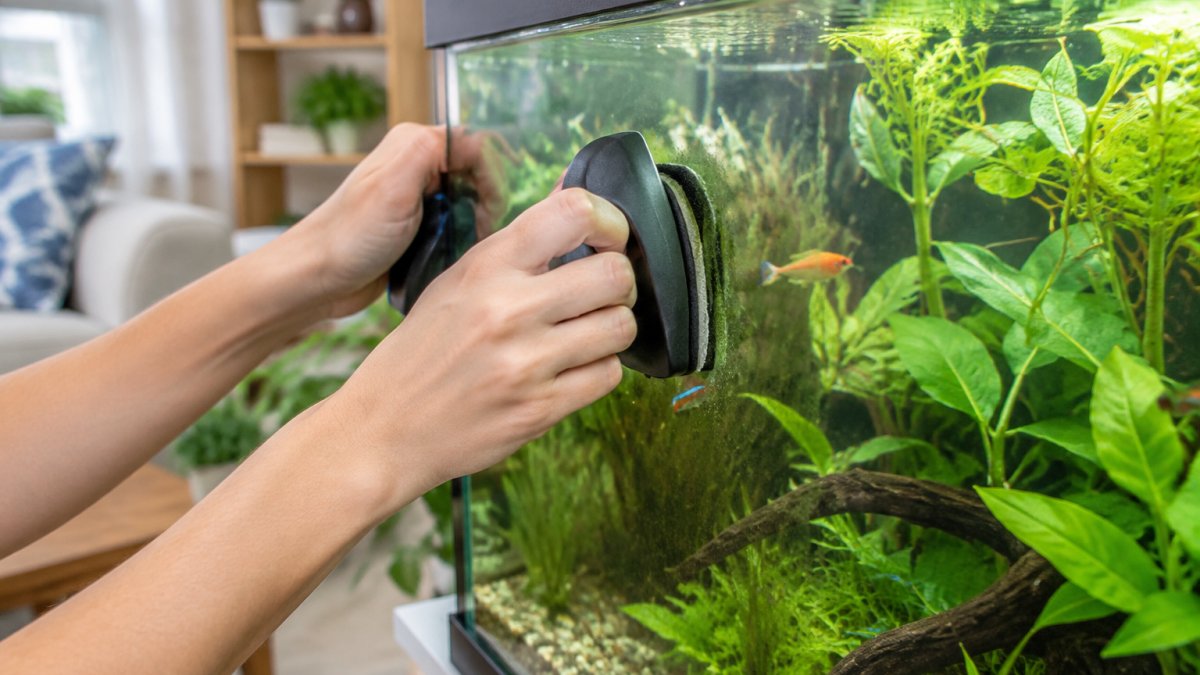
Handheld scrapers are cheaper and give you more direct control, but they require you to reach into the tank. You can also explore our Aquarium Bio Ball Media for pairing with a regular scraping routine.
Fish Tank Cleaning Tools Vacuum and Water Change Equipment
Gravel and water changes remove the waste that builds up at the bottom of the tank. The Python Aquarium Maintenance System connects directly to a faucet and uses a gravel tube to lift debris from the substrate.
For larger jobs, the Sicce Ultra Zero Utility Pump drains tanks quickly during deep cleaning. A fish tank skimmer can help keep the surface clear between water changes, and fish tank pipe fittings connect your siphon or vacuum to the tank.
How to Clean Fish Tank Glass Safely, Step by Step
Glass cleaning is the most visible part of tank care, and it is easy to do safely if you follow a consistent order. Work through these steps:
- Turn off all equipment and unplug heaters before you start.
- Remove loose algae with a magnetic scraper, working from the top down.
- Spot-clean stubborn patches with a melamine sponge, without any added soap.
- Wipe the exterior with a cleaner made for aquarium glass.
- Rinse any cloth or sponge in plain water, then let the glass dry before restarting equipment.
Stick to this sequence every time, and you will avoid most residue problems.
Choosing a Non-Toxic Fish Tank Cleaner and Avoiding Household Chemicals
The safest approach is often to skip cleaning chemicals altogether. Most interior glass, equipment, and decor problems are solved with plain water and a mechanical tool, and every added product is another chance to introduce a surfactant, solvent, or fragrance into the water. When a cleaner is genuinely needed, choose one formulated for aquatic use and verify its label rather than trusting a general-purpose product.
Household products to keep out of the tank
- Dish soap and detergents: contain surfactants that strip the protective mucus from fish gills and are toxic to invertebrates at trace levels. Residue persists in sponges, brushes, and porous decor even after rinsing.
- Glass and surface sprays: typically contain solvents, ammonia, or fragrances. Ammonia is toxic to fish, and fragrances are unnecessary chemical load. Never spray near an open tank; aerosols settle into the water.
- Bleach: useful for some equipment disinfection only under aquarium-specific protocols, and never on porous items that cannot be rinsed exhaustively. Residual chlorine is lethal.
- Abrasive scouring powders and pads: scratch glass and acrylic and leave particles behind. Fine scratches on acrylic trap algae and are hard to clean later.
- Antibacterial or scented soaps: the additives are the problem, not just the soap base. Wash hands with plain water or an unscented soap and rinse thoroughly before reaching into the tank.
How to evaluate an aquarium cleaner
A cleaner marketed for aquariums should state that it is ammonia-free, fragrance-free, and safe for fresh and salt water, and it should list its ingredients or at least its active components. A common pattern is to use such a product only on the exterior glass, applied to a cloth rather than sprayed toward the tank, and to keep it away from the water surface and equipment openings.
A practical residue-control routine
Keep a dedicated set of cloths and sponges for the tank, stored dry and away from kitchen and bathroom cleaners. Rinse tools in plain water before and after use, and dry them fully.
Watch out: a cleaner that is safe on exterior glass is not automatically safe inside the tank; never assume a surface product can be used on submerged surfaces without an explicit aquarium-safe claim.
Common Cleaning Mistakes and How to Avoid Them
Most cleaning problems come from a few repeated habits. Watch for these:
- Using household soap or detergent on glass, decor, or equipment.
- Cleaning every surface in one session and stressing the fish with too much change at once.
- Skipping the rinse step after wiping down a tool or sponge.
- Using a scouring pad on acrylic, which leaves fine scratches that trap algae.
- Reusing a brush or sponge across different tanks without cleaning it first.
Keep tools dedicated to a single aquarium where possible, and store them dry between uses to limit bacterial growth.
Choosing Your Starter Cleaning Kit from Bestie Pets Plus
A beginner kit should cover glass, substrate, and equipment without overlap. A practical starting set includes a magnetic scraper, a manual brush set, a turkey baster for spot cleaning, and a gravel vacuum for water changes. Pricing depends on the item, quantity, and delivery details, so visit the Bestie Pets Plus website for current prices or a quote.
Frequently Asked Questions
What is the safest thing to clean a fish tank with?
For most tanks, plain warm water and a dedicated aquarium-safe tool are the safest choice. Avoid household soaps, detergents, bleach and glass cleaners, since residues can remain after rinsing and harm fish or invertebrates. Products labeled non-toxic and free of ammonia are formulated for aquatic environments. Always rinse tools and surfaces thoroughly before returning fish to the tank, and check each product label for livestock safety.
Are magnetic aquarium cleaners safe for fish?
Magnetic algae scrapers can be safe when the outer and inner pieces are sealed and made from non-toxic materials, and the inner magnet is kept from scratching glass. The Flipper FLOAT Magnetic Algae Scraper uses a floating magnet design so the inner piece does not sink to the substrate. Check that the magnet is fully enclosed, inspect the tool for cracks before each use, and keep it away from loose gravel that could trap the magnet against the glass.
Can you use a regular sponge to clean an aquarium?
A regular kitchen sponge is not recommended because it may have been used with dish soap, grease or antibacterial products that residues can cling to. It can also leave fibers behind and scratch acrylic. A new sponge reserved only for aquarium use, rinsed thoroughly in plain water, is a safer option. Melamine foam sponges can work on glass when the product contains only melamine.
Do aquarium cleaning tools need to be rinsed before use?
Yes. Rinse every tool in plain tap water or dechlorinated water before and after each use, and never wash them with soap. Tools used on algae or waste should be kept separate from tools used for other purposes. Allow scrapers, brushes and turkey basters to air dry, and replace any tool with cracks or worn bristles, since these can trap debris and harbor bacteria.







0 Comments