
Table of Contents
- How Often Should I Clean My Rabbit’s Cage?
- What You’ll Need Before You Start
- How to Clean Rabbit Poop From Cage Floors and Litter Boxes
- How to Clean Rabbit Cage Messes With Vinegar
- Removing Urine Stains and Odors That Won’t Quit
- Rabbit Cage Cleaning Hacks That Reduce Mess
- Building a Simple Cleaning Routine for Your Rabbit
- Frequently Asked Questions
How Often Should I Clean My Rabbit’s Cage?
Clean your rabbit’s cage: spot-clean every day and do a full clean about once a week. That rhythm keeps odor down and stops droppings and wet bedding from building up, which is the core of keeping a clean rabbit cage.
Published advice is not fully consistent. Some sources recommend a weekly deep clean, while others suggest a deep clean every two weeks. Aosom guide to cleaning a rabbit hutch and The Spruce Pets guide to cleaning a rabbit cage both describe regular cleaning routines, but they do not agree on one interval. Oxyfresh guide to rabbit cage cleaning makes the key point: a messier rabbit, or an owner who is still learning, may need more frequent cleaning.
So treat the schedule as a starting point. Watch the cage itself. When it smells, when the floor is wet, or when droppings pile up in one corner, it is time to clean.
What You’ll Need Before You Start
Gather your supplies before you open the cage. A fast, organized clean is much easier when nothing has to be fetched mid-job.
- A cage cleaning net or small scoop for droppings
- Paper towels or a scrub brush
- White vinegar and water for the cleaning solution
- Fresh bedding and hay
- A bucket for wet bedding and waste
- Gloves, if you prefer them
Use a cage cleaning net to scoop out droppings and soiled bedding quickly. It keeps your hands clean and saves time on the daily spot-clean.
How to Clean Rabbit Poop From Cage Floors and Litter Boxes
Start with the litter box. Dump the old litter, rinse the box, and let it dry before adding fresh litter. Rabbits tend to use one corner, so the box often needs the most attention.
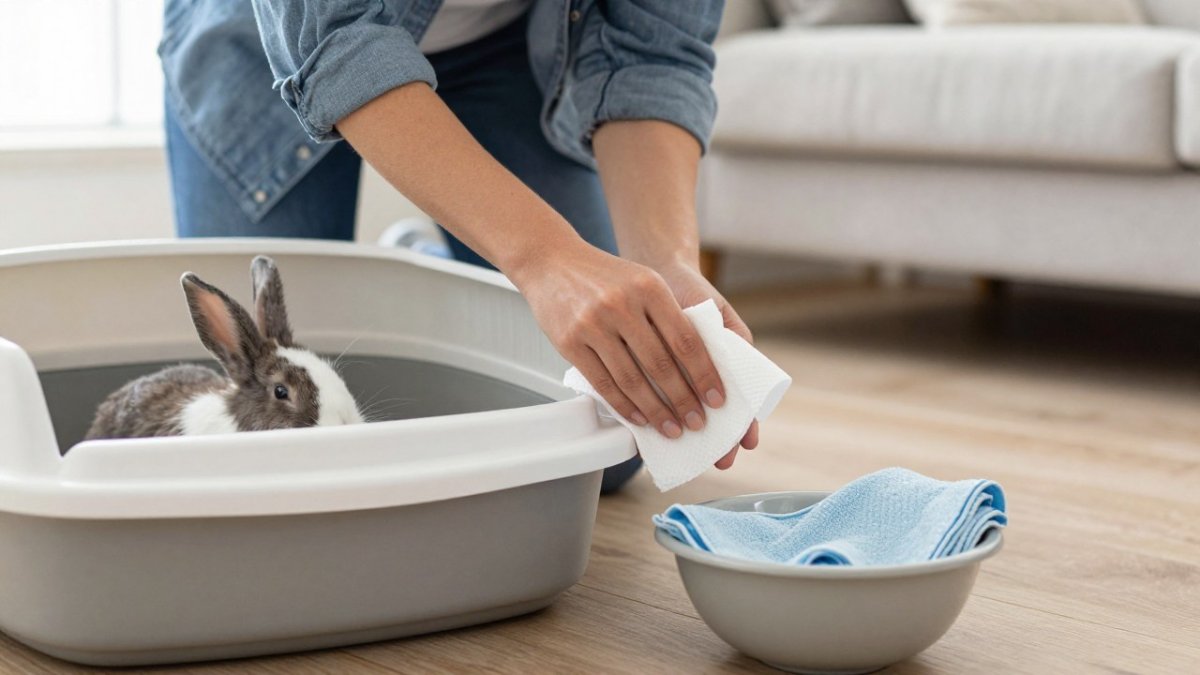
Next, clear the cage floor. Pick up droppings with your scoop, then remove any wet or soiled bedding. Wipe the floor with a damp paper towel to catch the rest.
- Remove the litter box and dump the old litter
- Scoop out droppings from the cage floor
- Remove wet or soiled bedding
- Wipe the floor and surfaces clean
- Refill the litter box and add fresh bedding
Wash the litter box with a mild solution, rinse it well, and dry it fully. A damp box invites odor and mold.
!A person in casual clothing wiping out a rabbit litter box with a paper towel beside a bowl of wet cleaning cloths in a tidy home setting
Here is a quick reference for the cleaning steps covered above.
| Step | What to do | Time or frequency |
|---|---|---|
| Empty litter box | Dump old litter and rinse the box | Daily spot-clean |
| Scoop droppings | Clear droppings from the cage floor | Daily |
| Remove soiled bedding | Take out wet or soiled bedding | Daily spot-clean |
| Wipe surfaces | Wipe floor with a damp paper towel | Daily spot-clean |
| Refill | Add fresh litter and bedding | After each clean |
| Full clean | Wash and dry everything before the rabbit returns | About once a week |
How to Clean Rabbit Cage Messes With Vinegar
White vinegar is a common choice for cutting odor and loosening grime. Mix equal parts white vinegar and water in a spray bottle, then apply it to the cage floor and sides.
Let the solution sit for a few minutes before wiping. Rinse surfaces with clean water afterward so no vinegar smell or residue is left where your rabbit sits. Dry everything completely before adding bedding.
Keep vinegar away from any area your rabbit might chew, and never mix it with bleach or other cleaners. Mixing products can release harmful fumes.
Removing Urine Stains and Odors That Won’t Quit
Recurring urine odor almost always means residue has soaked into a material the surface wipe cannot reach. The fix depends on what the urine landed on.
Sealed floors and plastic trays. Mix equal parts white vinegar and water, apply generously, and let it sit for 5-10 minutes to break down the uric acid salts. Scrub with a stiff brush, rinse with clean water, and dry fully. If a white chalky ring remains, that is mineral deposit, repeat the vinegar soak once, then rinse thoroughly. Avoid abrasive pads on plastic, which scratch the surface and give future urine a place to settle.
Wood surfaces and hutches. Wood absorbs urine quickly, and surface cleaning will not pull it back out. Scrub with a vinegar solution, rinse, and dry in direct air movement for at least 24 hours before returning the rabbit. If the wood still smells after drying, the material is saturated and should be replaced rather than repeatedly cleaned. Sealing bare wood edges with a rabbit-safe finish can slow future absorption.
Fabric liners, mats, and bedding. Machine-wash on a hot cycle with a mild, fragrance-free detergent, then air-dry completely. Vinegar can be added to the rinse cycle to help neutralize odor. Do not return damp fabric to the cage, trapped moisture is a common source of persistent smell.
Cage corners and seams. Urine pools in corners and along seams where panels meet. Use a small brush to work vinegar solution into the seam, rinse with a spray bottle of clean water, and dry with a cloth. A corner that stays damp will keep producing odor no matter how often the floor is wiped.
For disinfection, use only products labeled safe for small-animal housing, follow the label dilution exactly, keep the rabbit out of the area, ventilate the room, and rinse every surface the rabbit can reach. Never mix bleach with vinegar or other cleaners, the combination releases harmful fumes.
Watch out: if odor returns within a day or two of a thorough clean, the source is usually the material itself or the floor beneath the cage, not the cage surface. Check under trays and mats before cleaning the same spot again.
Rabbit Cage Cleaning Hacks That Reduce Mess
Prevention cuts down your cleaning work. A few simple changes keep the cage cleaner between full cleans.
- Place a double layer litter mat under the litter box to catch scattered litter and urine
- Lay an extra large waterproof litter mat around the cage to protect the floor
- Use a rabbit hay feeder bag to keep hay from spreading across the cage
These products help most when you set them up before the mess starts, so the floor stays cleaner from day one.
Building a Simple Cleaning Routine for Your Rabbit
A usable schedule separates quick maintenance from real cleaning work. Most rabbit owners settle into a three-tier rhythm: daily spot-cleans, a weekly full clean, and a monthly deep clean. The tiers matter because each one targets a different kind of mess.
Daily spot-clean (5-10 minutes). Scoop droppings from the cage floor and litter box, remove wet hay or bedding, and check the water bottle and food bowl for debris. This is the tier that prevents odor from starting. If you skip it for two or three days, the weekly clean becomes a much bigger job.
Weekly full clean (30-45 minutes). Dump and wash the litter box, replace all bedding, wipe down cage floors and sides with a vinegar-and-water solution, rinse, and dry completely before the rabbit returns. This is also the right time to wash food bowls and water bottles with hot soapy water and rinse them thoroughly.
Monthly deep clean (1-2 hours). Disassemble what you can, scrub corners and seams where urine collects, check wooden surfaces for absorbed stains, and inspect the surrounding run or floor area. Replace worn liners, trays, or mats rather than scrubbing them indefinitely.
Adjust the cadence to the rabbit, not the calendar. A single rabbit in a large enclosure with a well-placed litter box may hold a weekly rhythm comfortably. A pair, a young rabbit, or a rabbit recovering from a diet change may need spot-cleans twice a day and a full clean every four or five days. The signal to clean is concrete: visible droppings accumulating in a corner, damp bedding under the hay, or a urine smell that lingers after the last clean.
Watch out: a sudden increase in mess, more urine, softer droppings, or litter-box avoidance, is a health signal, not a cleaning problem. If the change persists for more than a day or two, contact a veterinarian rather than simply cleaning more often.
Frequently Asked Questions
How do you disinfect a rabbit cage?
Remove your rabbit and all accessories first, then clean the surfaces with hot water and a mild, pet-safe cleaner. Rinse thoroughly, because leftover soap residue can irritate your rabbit’s nose and feet. Let the cage dry completely before returning your rabbit. For a disinfecting step, check the product label to confirm it is safe for use around rabbits, and avoid strong fragrances or bleach-based products unless the label clearly states they are safe for small animals and have been fully rinsed away.
Can you use vinegar to clean a rabbit cage?
Yes, white vinegar diluted with water is a common choice for cutting through urine residue and odor on cage floors, bowls, and hard plastic surfaces. Mix a solution, scrub the area, then rinse well with clean water and dry completely. Vinegar should not be used as the only step for disinfection, and it should never be mixed with bleach or other cleaners. Always ventilate the room and keep your rabbit out of the area until the cage is dry and free of any vinegar smell.
How often should a rabbit cage be cleaned out?
Spot-clean droppings and wet bedding daily, then plan a fuller cleaning on a regular weekly basis. Published guidance varies: some sources recommend a weekly deep clean, while others suggest every two weeks. A messier rabbit or a less-trained one may need more frequent cleaning. Adjust the schedule based on how quickly the litter area fills up and how strong the odor becomes between cleanings.
How do you remove dried rabbit urine from a cage?
Soak the stained area with a diluted white vinegar solution and let it sit for several minutes so it can loosen the residue. Scrub with a brush, rinse with clean water, and dry fully. For stubborn stains on plastic or metal, repeat the soak rather than scrubbing harder, which can scratch the surface and trap odor. Replacing heavily soaked bedding and litter helps prevent the smell from returning.






0 Comments